Video version of this article
0:05:06
Or so they say. But did they really? Let's find out...
If you're a regular viewer please DON'T try to become a Patreon supporter for as little as $1 per video because they are of course free for me to make. I have NO EXPENSES when I make these vidoes. I...
A lot of people claim that life is better today, that we are better off living like we do today, and they point at the fact that life expectancy is much higher today than it was in the past. But are they right? Let's find out.
The reason why we have a high life expectancy today is that we have modern science, which you would probably think that, well, that proves your point, right? But in reality, modern science, what it does is to take individuals that from a natural point of view are not fit to live and ensure that they live anyhow. And this is not very good from a biological point of view. Modern medicine is ensuring that the quality of mankind is reduced for every generation, because all these "inferior" individuals are allowed to live, are allowed to survive, are allowed to live to the age of procreation. They are allowed to pass on their genes. And sure, it brings the life expectancy number way up, but in the long run it's terrible. It's going to be the end of us. At one point we will be not only completely useless from a biological point of view, but also completely dependent on modern medicine in order to survive. Which means that if we at one point lose modern medicine, then we will go extinct. However, if we didn't have modern medicine, indeed fewer of us would survive. Only the strong, and of course the lucky. But by and large it would be beneficial for our biological reality.
And also the fact that life expectancy was lower doesn't mean that they didn't grow old. It just meant that a lot more of them died during childhood. But if they survived childhood, they would live long lives just like we do today. There are many historical examples of this, like these guys: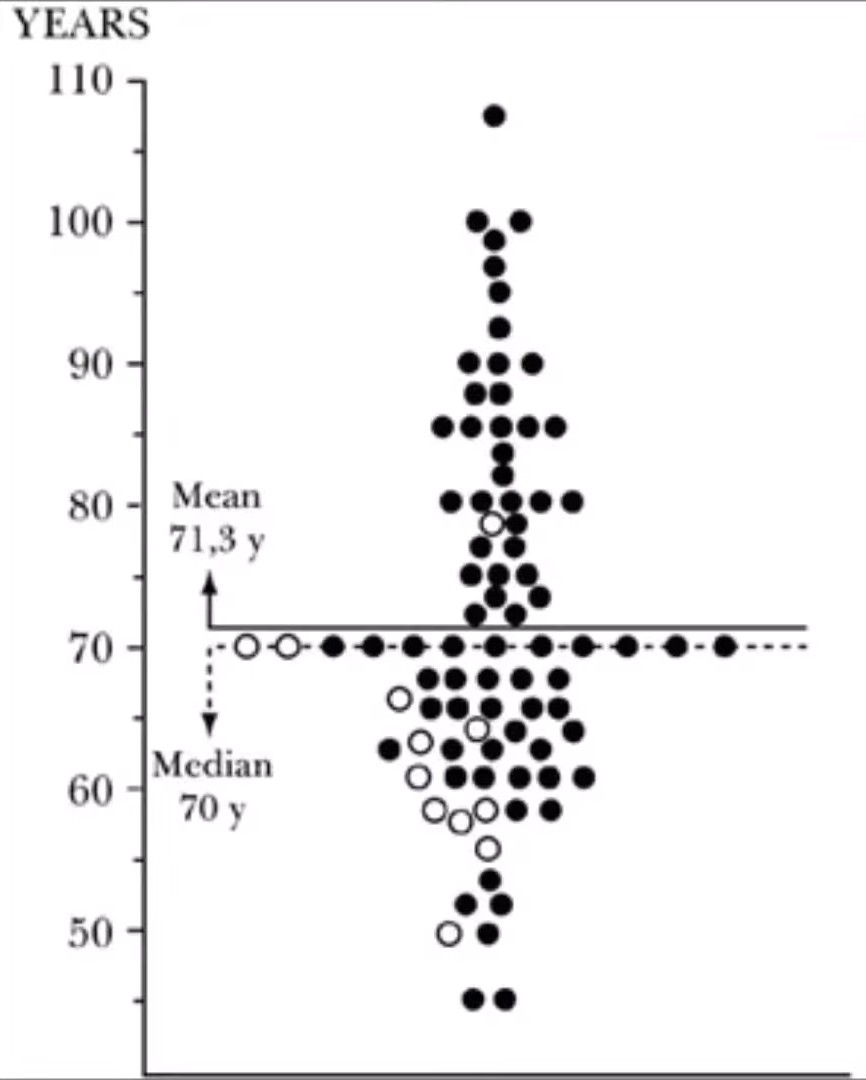
Amongst these were: Aristarchos and Democritos, who lived over 100 years and Gorgias who died at the age of 108 years (483-275 B.C.)
Also, those who did live to old age in the past, they did with a much better health than those who live to an old age today. Because they were the strong ones, and they had much fewer medical problems, so to speak, than the old people of today have. And because many old people today are held artificially alive by modern medicine. So the quality of life,[1]I would assume, was much better. We should argue in favour of a system that enables our species to improve, not a system that enslaves our species. What if some evil creature takes control of modern medicine? What if some not very benevolent group decides to get in a monopoly on this modern medicine? And you, you're gonna need those pills in order to survive. You'll be their slave, you'll do whatever they want you to. And as I see it, that's kind of a terrible prospect, isn't it? Who controls medicine? And even today, we see strong tendencies towards just this.
The reason why we have a high life expectancy today is that we have modern science, which you would probably think that, well, that proves your point, right? But in reality, modern science, what it does is to take individuals that from a natural point of view are not fit to live and ensure that they live anyhow. And this is not very good from a biological point of view. Modern medicine is ensuring that the quality of mankind is reduced for every generation, because all these "inferior" individuals are allowed to live, are allowed to survive, are allowed to live to the age of procreation. They are allowed to pass on their genes. And sure, it brings the life expectancy number way up, but in the long run it's terrible. It's going to be the end of us. At one point we will be not only completely useless from a biological point of view, but also completely dependent on modern medicine in order to survive. Which means that if we at one point lose modern medicine, then we will go extinct. However, if we didn't have modern medicine, indeed fewer of us would survive. Only the strong, and of course the lucky. But by and large it would be beneficial for our biological reality.
And also the fact that life expectancy was lower doesn't mean that they didn't grow old. It just meant that a lot more of them died during childhood. But if they survived childhood, they would live long lives just like we do today. There are many historical examples of this, like these guys:
- Ovid: 61
- Crassus: 62
- Cicero: 63
- Seneca: 69
- Socrates: 70
- Gaius Marius: 71
- Epicuros: 72
- Archimedes: 75 (assasinated)
- Tiberius: 79
- Plato: 80
- Aristarchos: 80
- Apollonius: 85
- Diogenes: 89
- Democritus: 90
- Thales of Miletus: 92
Individual values of the length of life of 83 men living in the 5th and 4th century B.C. in Greece (open circles indicate violent death).
Amongst these were: Aristarchos and Democritos, who lived over 100 years and Gorgias who died at the age of 108 years (483-275 B.C.)
Also, those who did live to old age in the past, they did with a much better health than those who live to an old age today. Because they were the strong ones, and they had much fewer medical problems, so to speak, than the old people of today have. And because many old people today are held artificially alive by modern medicine. So the quality of life,[1]I would assume, was much better. We should argue in favour of a system that enables our species to improve, not a system that enslaves our species. What if some evil creature takes control of modern medicine? What if some not very benevolent group decides to get in a monopoly on this modern medicine? And you, you're gonna need those pills in order to survive. You'll be their slave, you'll do whatever they want you to. And as I see it, that's kind of a terrible prospect, isn't it? Who controls medicine? And even today, we see strong tendencies towards just this.
- The quality of life at old age, that is.