Video version of this article
0:04:24
VR to Mr. Beige about Berserkers. His video: https://www.youtube.com/watch?v=PBUGQkpk3RE
My book about "Sorcery and Religion in Ancient Scandinavia": http://www.amazon.co.uk/Sorcery-Religion-Ancient-Scandinavia-Vikernes/dp/0956695930/ref=sr_1_1?ie=UTF8&q...
Video Response to Lindy Beige; About Berserkers.
The tradition of the berserkers is simply a tradition that we could call a totemic tradition. And just like other cultures in our world had totem animals, we know them particularly well from Northern America, our forebears did too. They had totem animals. And the idea was that you could take the life force of an animal and use it for sorcerers' purposes.
The tradition of having totem animals is age-old, it's from the Stone Age and it originates in the bear cult, the oldest religion ever, the origin of all other religions.[1]And the idea is, of course, that you kill an animal and then you take the life force of the animal and then you can use this to protect yourself. So you take the animal's skin outside your own and by doing so you take the life force of the animal outside your own. So when you are hit, it's the animal that gets hit and not you, so you are protected by the animal. That's the idea of the totem animal.
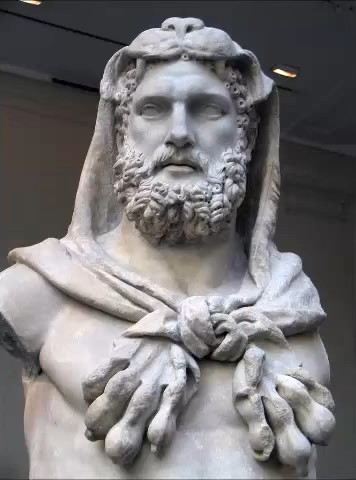
In Scandinavia, the most common animal to use as a totem animal in this context was the bear or the wolf. We have the berserks, but we also have the ulf-heiðinn, which means simply wolf skin. And in the Celtic-speaking parts of Europe, they commonly use the boar for the same purpose. In southern Europe, they use the lion or the leopard, the cave lion, that is. And of course, in older times, they had cave lions elsewhere in Europe as well. And they probably use them as totem animals.
And the reason why they use these wild, ferocious, dangerous animals as totem animals is, of course, that these animals are strong. And again, I have to point at the bear cult, with the bear being the most important animal in the European tradition. And the idea that they went berserk is, of course, actually related to the tradition of the berserks because they believed that they were invulnerable. They had the protection of the life force of the bear. This tradition is, of course, from the Stone Age. And when we move to the Viking Age, the tradition has changed. And these sorcerers with totem animals are no longer the kings themselves. They are instead just reduced to being just champions for the king. So the berserks did exist. They did have special powers, or they did believe that they had special powers. And one of them was invulnerability in battle because they wore the life force of the animal outside their own protection.
And this is very much historical. You can find sources supporting what I say easily. And you can look at the fairy tales. You can look at the mythology. You can look at the traditions. And of course, you have to compare the different European mythologies. You can't just look at one of them. You have to look at all of them, and you have to understand that all of them are actually not the same, but they have the same origin, and that they were originally the exact same mythology, the exact same religion.
The tradition of the berserkers is simply a tradition that we could call a totemic tradition. And just like other cultures in our world had totem animals, we know them particularly well from Northern America, our forebears did too. They had totem animals. And the idea was that you could take the life force of an animal and use it for sorcerers' purposes.
The tradition of having totem animals is age-old, it's from the Stone Age and it originates in the bear cult, the oldest religion ever, the origin of all other religions.[1]And the idea is, of course, that you kill an animal and then you take the life force of the animal and then you can use this to protect yourself. So you take the animal's skin outside your own and by doing so you take the life force of the animal outside your own. So when you are hit, it's the animal that gets hit and not you, so you are protected by the animal. That's the idea of the totem animal.
The most famous berserk (lion-serk?) of all time: Herakles.
In Scandinavia, the most common animal to use as a totem animal in this context was the bear or the wolf. We have the berserks, but we also have the ulf-heiðinn, which means simply wolf skin. And in the Celtic-speaking parts of Europe, they commonly use the boar for the same purpose. In southern Europe, they use the lion or the leopard, the cave lion, that is. And of course, in older times, they had cave lions elsewhere in Europe as well. And they probably use them as totem animals.
And the reason why they use these wild, ferocious, dangerous animals as totem animals is, of course, that these animals are strong. And again, I have to point at the bear cult, with the bear being the most important animal in the European tradition. And the idea that they went berserk is, of course, actually related to the tradition of the berserks because they believed that they were invulnerable. They had the protection of the life force of the bear. This tradition is, of course, from the Stone Age. And when we move to the Viking Age, the tradition has changed. And these sorcerers with totem animals are no longer the kings themselves. They are instead just reduced to being just champions for the king. So the berserks did exist. They did have special powers, or they did believe that they had special powers. And one of them was invulnerability in battle because they wore the life force of the animal outside their own protection.
And this is very much historical. You can find sources supporting what I say easily. And you can look at the fairy tales. You can look at the mythology. You can look at the traditions. And of course, you have to compare the different European mythologies. You can't just look at one of them. You have to look at all of them, and you have to understand that all of them are actually not the same, but they have the same origin, and that they were originally the exact same mythology, the exact same religion.
- The Religion of the Neanderthals (i.e. the proto-Europeans).